
Many emerging “GEO Experts” are like Snake Oil Salesmen
There’s a new shiny object in town: “Generative Search Optimization”.
And many new marketers are jumping on the bandwagon. But there’s a problem:
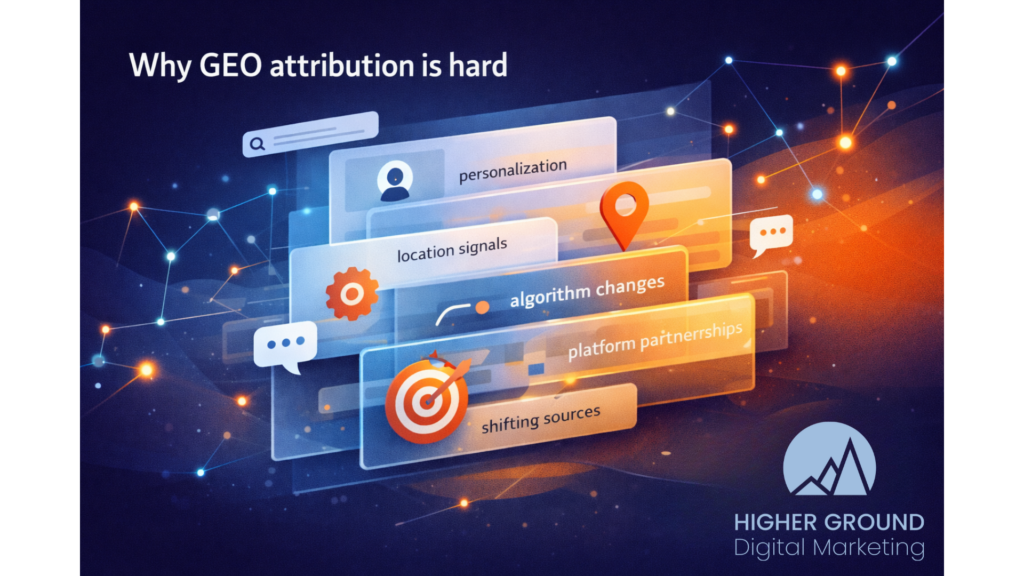
Proving AI search attribution is difficult, if not impossible. Many tools claim to measure the success of any one of these measurement tools, but there are too many compounding factors that affect generative engine results:
- Personalized results based on what the platform already knows about the user
- Location signals
- Rapid algorithm changes
- Extreme, almost infinite variability in the prompt or query
- Shifting sources create a moving target
- Business partnerships are happening- like how Apple recently signed a contract with Google’s Gemini to be the AI engine behind the popular built-in iphone voice assistant Siri.
…But there is good news:
In the AI software battle, two platforms have achieved widespread adoption: ChatGPT, and Google (Gemini). Other LLMs, while in use, take much less market share.
To make things more interesting, many LLM results are powered by Google’s own search index – either in training data, or by using “RAG” – Retrieval-Augmented Generation. In other words, the AI bot will search Google (and other sources) and return the search results, interpreted through the lens of AI.
What does this mean for SEO VS GEO?
What this means is that Google is continually solidifying itself as the most important player in AI optimization. And for now, finding usable metrics like visibility, share of voice, and “mentions” is nearly impossible.
So for the determined digital marketer, this means two things:
1. SEO is of the utmost importance.
SEO is, in its most simple form, the art and science of showing up when people demonstrate intent or search online. And by my definition, great SEO includes GEO.
This statement will likely add to an ongoing debate about generative engine optimization vs SEO. And like any debate, you have many viewpoints. But I have yet to see anything related to GEO that cannot be enveloped by an extremely comprehensive SEO strategy and tactics.
- Google is still the largest surface area to dominate
Google has worked for many years to build a search engine that returns the most relevant useful information to the searcher. This includes YouTube, Reddit, and many other sources quoted by AI engines (including Google). They have built lasting trust with several generations of searchers, and they still control the vast majority of the search market.
Also relevant is that Gemini is the brain behind Google’s AI overviews – a wildly popular and seemingly ever-present component of Google’s SERPs (Search engine results pages). That means being recommended by Google becomes ultra-important. This is often the first thing people see when searching on Google.
Keep in mind: AI search traffic still only accounts for between 1%-2% of website traffic, as opposed to Google, which can account for roughly 30-65% of traffic- maybe more when you consider AI overviews affecting Direct traffic as people directly type in your website (The links are clunky and sometimes tough to trust or follow.
What are the Most Impactful Techniques for GEO and SEO?
For now, the most impactful things you can do to drive business are still considered SEO. But if you can afford it, these things can move the needle significantly and will affect your long-term brand positioning.
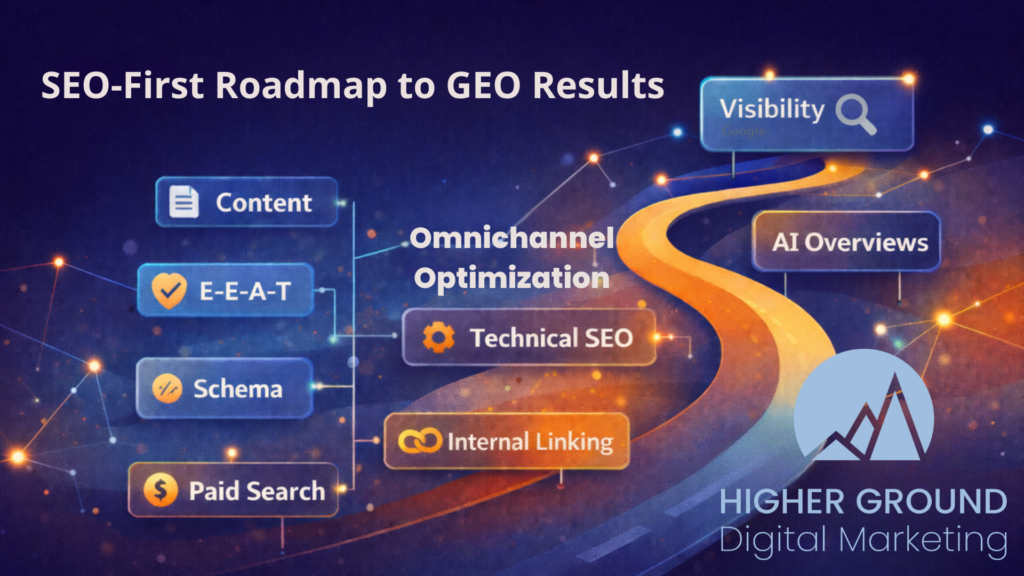
These 13 tactics are still getting results for SEO and GEO:
- Content! Targeted content around your products or services. It’s OK to use AI, but only with a rock-solid SEO strategy and loads of expert human intervention, edits, rewrites, and
- E-E-A-T guidelines
- Your content should demonstrate your unique market differentiators while demonstrating your expertise, experience and authority, thereby earning trust.
- Technical optimizations for speed and Site Code Errors
- Image optimization and targeted alt-text
- Paid search
- As of this writing, Google is still conquesting on SERP real estate, with sponsored listings literally everywhere. This week, I saw the “local 3-pack” turn into a “Local 1-pack”, with 3 sponsored listings and just ONE organic local business listing. Make sure your paid search team is high-quality and knows SEO fundamentals, including keyword research
- Customer Profile Targeting
- When you speak directly to your customer and give them what they want with clarity and ease, magic happens!
- Inlinking
- Indexing optimization (robots.txt, server settings, Google Search Console Indexing Report, installing indexNow for wordpress websites)
- Structured Data
- Adding JSON-LD code to your site can help your brand appearance across the internet and AI platforms.
- Optimizing your main website pages
- Start with these 4 crucial pages below. AI engines and search engines alike look for these pages:
- Homepage
- About Page
- FAQ page
- Location Page(s)
- Start with these 4 crucial pages below. AI engines and search engines alike look for these pages:
- Improving or deleting low-quality content
- Put together a website URL map and connect Google Analytics and Search Console to see the data, drop pages that aren’t ranking well or aren’t relevant anymore. Or need too much work to be viable. Instead focus on the high-value pages on your website and make it easy for Google and your patients and customers to understand everything about your business.
- Keyword research based on real data
- Keyword Research is the cornerstone of SEO. It helps us understand how people are searching, the ways in which they are searching, and at what stage of the marketing funnel they are in. Tying expert keyword research into content campaigns with aligned relevance and intent is still the most effective way to get high-quality patients and customers to your website. After that, it’s up to your conversion funnel performance.
- An omnichannel approach
- While it can be costly and time-consuming, broadcasting your messaging across the relevant omnichannel platforms can have huge results in the short term and long-term.
These outdated SEO techniques don’t work for persistent long-term results:
- AI-Generated content
- Keyword stuffing
- Low-quality link building
- This is a tempting trap, and with the exception of directory partner websites like Yelp or Healthgrades, these links usually don’t do much to actually drive business
- AI SEO tools
- It’s an embarrassment of epic proportions when low-skill and inexperienced SEOs use these platforms as though they’re the new thing and can solve all our problems. I’ve tried several of these, and they are more of a distraction. I do think they can be useful, but it takes more work to configure their clunky software correctly and make all the edits than it does to use my own proprietary processes and systems – and the end result is, anecdotally, much lower quality.
I’m on a mission to build a better SEO and AI search company. Join our Newsletter to be the first to know about our upcoming SEO community membership.